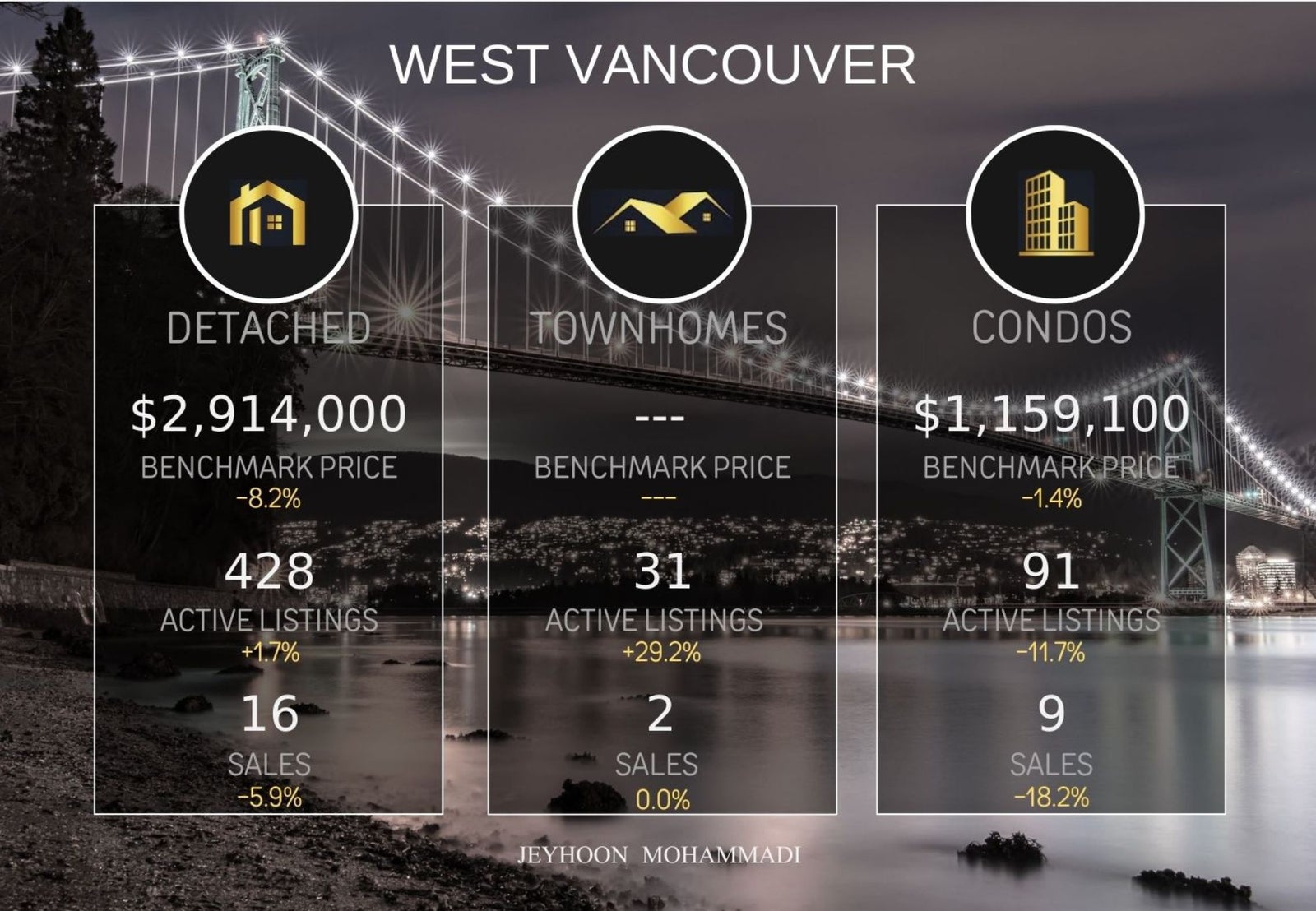
Source: Greater Vancouver Realtors MLS® Statistics January 2026
In January 2026, the West Vancouver housing market continued the trend toward more balanced and buyer-leaning conditions compared with last year. According to local MLS® data, total sales in West Vancouver were down modestly, approximately 6.5% below January 2025 levels, while inventory levels remained steady, with around 558 active listings on the market. New listings were slightly higher year-over-year, suggesting that sellers are continuing to test the market rather than pulling back entirely. These conditions reflect a cooler market where buyers have more choices and negotiating power compared with the same period last year.
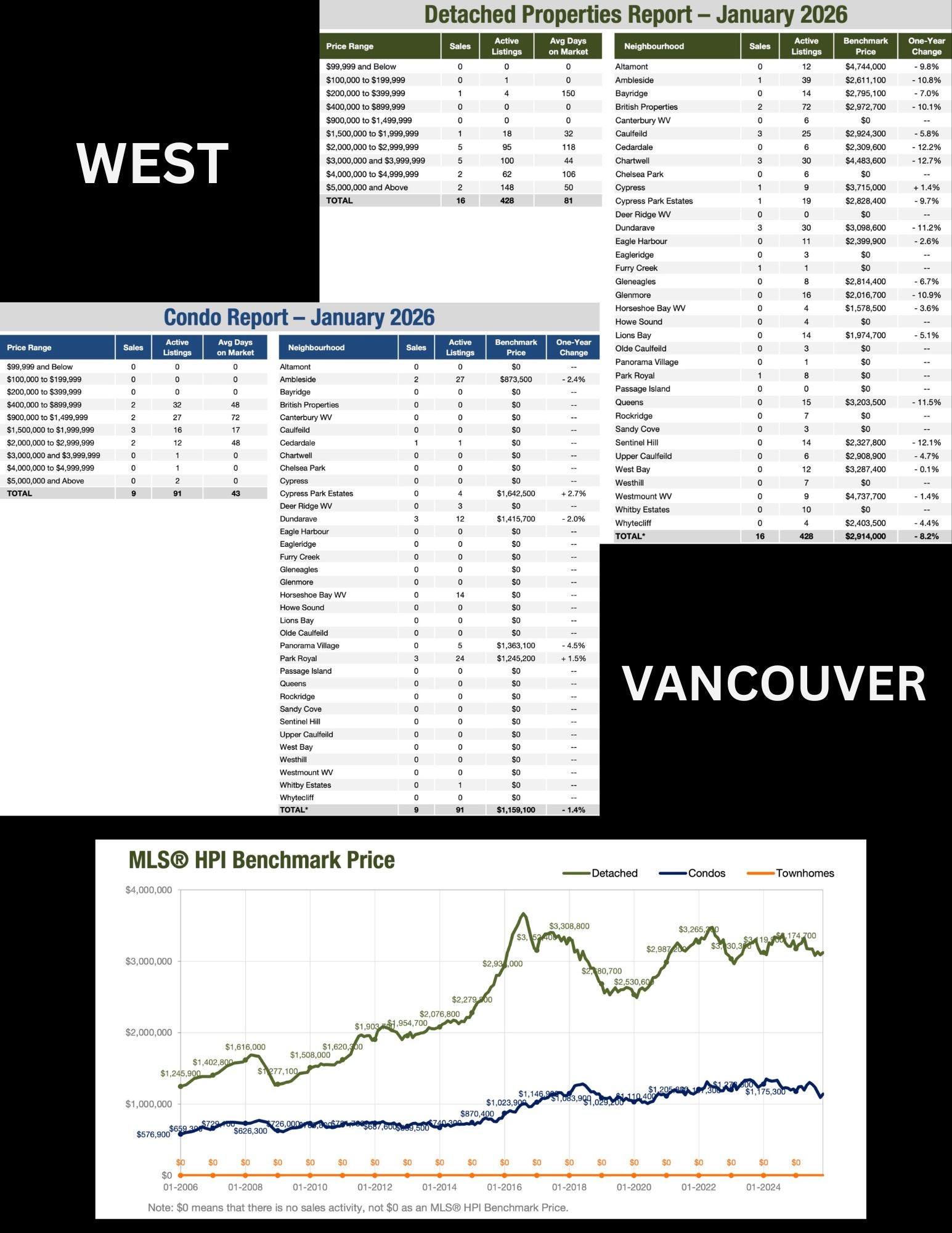
Source: Greater Vancouver Realtors MLS® Statistics January 2026
Across the broader Greater Vancouver region, January’s statistics from the Real Estate Board of Greater Vancouver highlight a marked slowdown in overall sales activity versus January 2025. Metro Vancouver reported a nearly 29% decrease in total residential sales year-over-year, and benchmark prices for detached, attached, and apartment properties all declined compared to both January 2025 and December 2025. Detached homes saw one of the sharper benchmark price drops, while townhouse and condo prices also trended lower, underscoring the ongoing adjustment in pricing across property types.
Nationally, data from the Canadian Real Estate Association (CREA) shows that overall home sales activity in Canada slowed late in 2025, with sales and the MLS® Home Price Index trending lower year-over-year. CREA continues to forecast a spring rebound in activity as buyer demand re-enters the market, though broader economic pressures and cautious consumer sentiment are influencing buying patterns across many regions.